Short version
GLP-1 medications slow the whole gut, not just the stomach. Add the fact that you eat less, drink less without noticing and move less on rough days, and constipation becomes the most common complaint after nausea. The fix works in order: fluids first, then fiber added slowly, then a daily rhythm of breakfast and a walk. Fiber without fluid makes it worse.
Why it happens
GLP-1s slow stomach emptying and the movement of the gut further down. You eat less, so there is less bulk to move. Thirst drops along with appetite, so most people drink far less than before without noticing. And on peak days after a shot people sit still. Each of these slows things on its own; together they can stop them.
It is usually worst in the first weeks and after a dose increase, then eases as the gut adapts. For some people it stays a weekly thing to manage for as long as they take the medication, which is why the habits below matter more than any single fix.
What usually helps
Fluids first. 64 to 80 oz of fluid a day, sipped through the day, starting with a glass on waking. Broth, soup and herbal tea count. Fiber without fluid turns to cement.
Then fiber, slowly. Add one source every few days: oats, chia seeds, pear, kiwi, prunes, cooked vegetables, beans. Too much too fast means bloating and gas, not relief.
Breakfast within two hours of waking. Eating triggers the reflex that moves the bowel. Skipping breakfast skips the signal.
Move every day. A twenty minute walk, especially after a meal, does more than any food on this list.
A fixed time. Sit on the toilet after breakfast whether you feel the need or not, feet on a small step. Routine is what a slow gut responds to.
Some healthy fat. Olive oil on vegetables, a few nuts, half an avocado help things move. Fried fat on peak days does the opposite.
Ask about a laxative. A fiber supplement (psyllium, sold as Metamucil) or an over the counter osmotic laxative (polyethylene glycol, sold as Miralax) is a normal part of GLP-1 care for many people. Ask your clinician which one and how often, rather than guessing in the pharmacy aisle.
Foods that usually sit well
Eat this week
Oatmeal, chia pudding, whole grain bread in small portions
Pear, kiwi, prunes, figs, berries
Cooked vegetables: carrots, zucchini, spinach, green beans
Beans and lentils, in soups to start
Greek yogurt and kefir
Warm drinks in the morning, water with lemon through the day
Skip for now
Cheese heavy meals and processed snacks
White bread and crackers as your main carbohydrate
A fiber supplement without a full glass of water
Alcohol, which dehydrates
Adding three fiber sources in one day
Sitting still all day on peak days
A sample day
| On waking | A glass of warm water, then breakfast within two hours. |
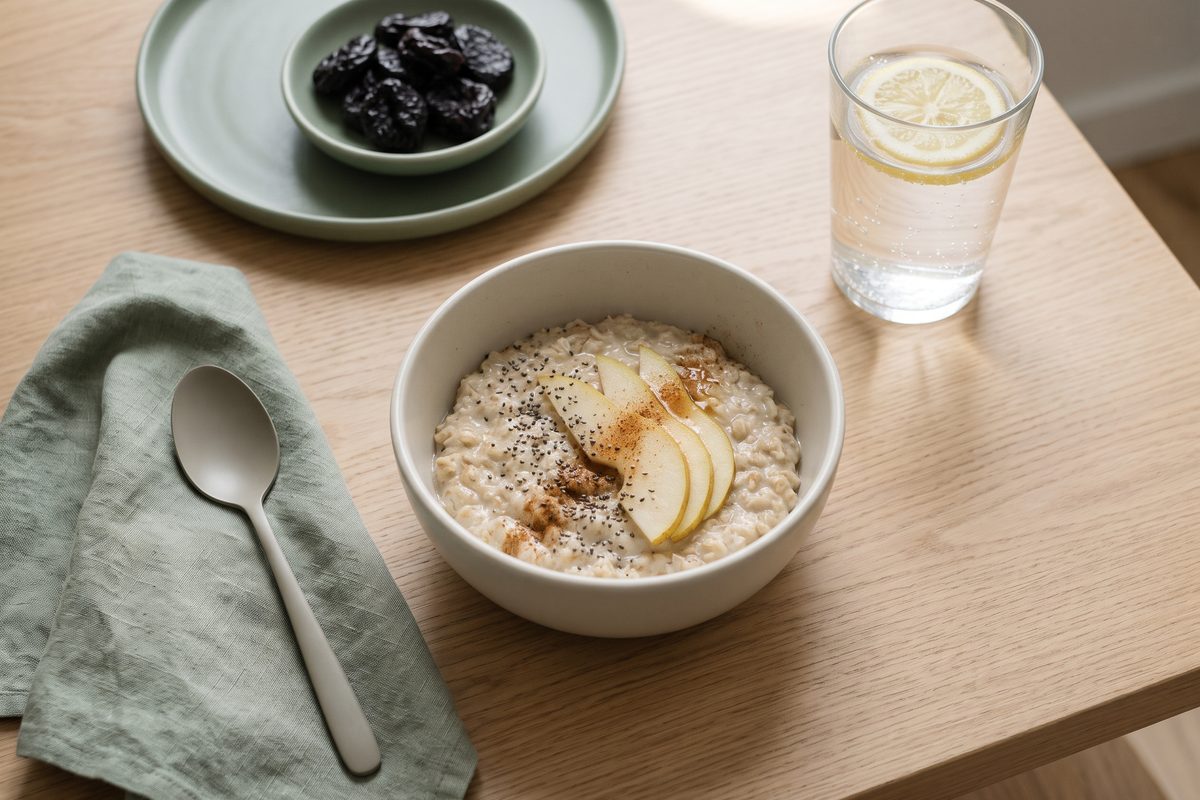
| Morning | Oatmeal with a spoon of chia seeds and sliced pear. Tea. |
| Mid morning | A kiwi. Water. |
| Lunch | Lentil soup with a slice of whole grain bread. |
| Afternoon | Greek yogurt with four or five prunes. A twenty minute walk. |
| Early dinner | Baked fish, roasted carrots and zucchini with olive oil, a small portion of brown rice. |
| Evening | Herbal tea. Nothing else to eat. |
Fiber goes up gradually over the week, fluids stay at 64 oz or more every day.
When to call your clinician
No bowel movement for a week despite fluids and fiber
Severe bloating with abdominal pain and vomiting, or not being able to pass gas; this is rare but serious: go to the emergency room
Blood in your stool
Constipation alternating with watery diarrhea
Constipation that does not improve after four weeks on the same dose with the changes above
Common questions
How long does constipation last on a GLP-1?
It is usually worst in the first weeks and for a week or two after each dose increase. Most people see it ease within four to eight weeks at a stable dose. Some manage it for as long as they take the medication, with fluids, fiber and sometimes a laxative.
Can I take a laxative?
Many people on GLP-1s use a fiber supplement such as psyllium (Metamucil) or an over the counter osmotic laxative such as polyethylene glycol (Miralax). Ask your clinician which one and how often; daily stimulant laxatives are usually not the first choice.
Does more fiber always help?
Only with enough fluid, and only when added slowly. Fiber without water or too much at once makes bloating and discomfort worse.
Why kiwi and prunes?
Both have good evidence in constipation studies. Prunes bring fiber and sorbitol, kiwi brings fiber and an enzyme that helps movement. Two kiwis or four to five prunes a day is a common amount.
Is it the medication or my diet?
Both. The medication slows the gut; what you eat, drink and how much you move decide how much you notice it.
Not sure whether food is the problem? The two minute quiz looks at your meals, protein, fat and fluids together and tells you where to start.